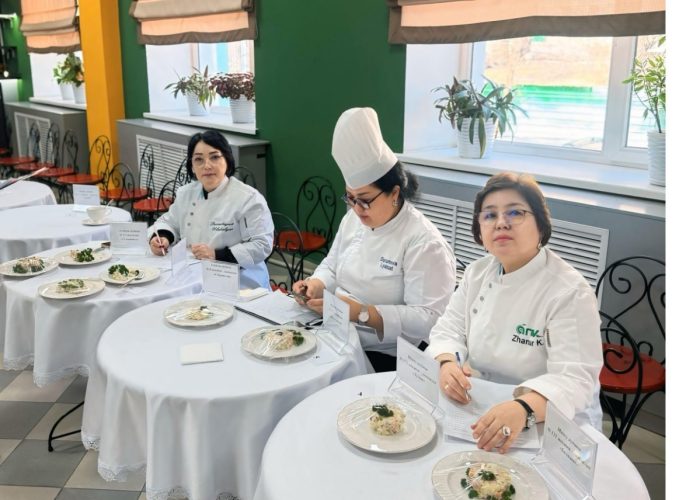
10130300 Catering organization

Specialty: 10130300 – “Food Organization”

Qualification: 3W10130302 – “Chef”

Duration of study based on secondary education – 1 year 10 months

Mode of study – full-time, Kazakh/Russian

The “Food Organization” specialty is designed to train qualified specialists capable of organizing and implementing the technological process of preparing, decorating, and serving food, as well as ensuring high-quality and safe food for the population in various types of catering establishments.

Qualification: Chef.

Purpose of training

To train specialists in food preparation technology, organizing the work of production units in catering establishments, as well as ensuring sanitary and hygienic standards, product quality control, and customer service.

Field of professional activity

Graduates can work in the following industries:

catering (restaurants, cafes, canteens, bars, delis);
tourist and hotel complexes;
Childcare, educational, and medical institutions (canteens, kitchens);
food processing enterprises and catering services;
enterprises involved in developing recipes and food processing technologies.
Primary Chef Activities
Preparation of raw materials and semi-finished products:
receiving, storing, and processing food products;
compliance with product adjacency rules and storage conditions;
preparing ingredients for heat treatment.
Preparation of dishes and culinary products:
mastering and applying process charts;
preparing cold, hot, starchy, sweet dishes, and beverages;
compliance with process schedules;
ensuring a high level of taste and aesthetic qualities of products.

3.Food Presentation and Serving:

creative presentation;
selection of tableware and accessories;
servicing and serving in accordance with establishment requirements.

4.Quality Control and Food Safety:

compliance with sanitary and hygienic norms and regulations;
compliance with HACCP standards;
Monitoring expiration dates and product quality.

5. Organizational and Production Activities:

Participation in menu planning;
Calculation of required raw material quantities;
Organization of kitchen operations;
Accounting and reporting on production operations.
Professional Competencies of a Graduate

Graduates should be able to:

Prepare dishes according to the process charts of various cuisines;
Use modern kitchen equipment;
Assess the quality of raw materials and finished dishes;
Comply with sanitary and hygienic requirements;
Maintain process documentation;
Organize the workplace and use work time efficiently;
Interact with staff and clients.
Personal Qualities of a Specialist
Accuracy and responsibility;
Ability to work in a team;
Developed aesthetic perception and taste;
Organization and stress resistance;
Readiness for continuous improvement of skills. Career Opportunities

After earning the Chef qualification, a specialist can advance their professional skills and obtain the following qualifications:

Chef,
Foodservice Technologist,
Foodservice Manager,
Restaurant Management Specialist.

Specialty: 10130300 – “Foodservice”

4S10130303 – “Foodservice Technologist”

Duration of training: Based on basic

secondary education – 2 years 10 months

4S10130303 – “Foodservice Technologist”

10 months

Based on a technical and vocational education program

Mode of study: full-time, Kazakh/Russian

The “Foodservice” specialty is designed to train specialists who ensure the efficient organization of production, sales, and quality control of foodservice products.
A foodservice technologist is a key specialist responsible for the development, implementation, and monitoring of technological processes for preparing dishes and culinary products, as well as compliance with sanitary norms and quality standards.

Professional Activities of a Food Technologist
Professional Activities:
Foodservice establishments (restaurants, cafes, canteens, bars, catering companies);
Fast food service establishments;
Kitchen facilities in educational, medical, and social institutions;
Food processing plants;
Preparation and production shops.
Objects of Professional Activity
Raw materials and food products;
Semi-finished and finished culinary products;
Food production processes;
Recipes, process charts;
Foodservice equipment and inventory;
Production department personnel;
Production quality and safety documentation.
Main Professional Activities

A food service technologist performs:

Production and technological activities

Development and implementation of food recipes;
Preparation of process charts and costing sheets;
Control of the food preparation process;
Ensuring consistent product quality.

Organizational and managerial activities

Organization of production shop operations;
Allocation of responsibilities among staff;
Monitoring compliance with occupational health and safety regulations.

Control and analytical activities

Quality control of raw materials, semi-finished products, and finished goods

Instructions;
Compliance with sanitary and hygienic standards (SanPiN, HACCP);
Analysis of losses, defects, and production efficiency.

Planned economic activities

Participation in calculating the cost of dishes;
Rationing raw material consumption;
Monitoring the rational use of resources.
Professional competencies of a technologist
Graduates should be able to:
Develop a range of dishes taking into account demand and nutritional standards;
Apply modern food preparation technologies;
Compile and read technological documentation;
Monitor product quality and safety;
Organize the production process at a food service establishment;
Work with regulatory and technical documentation;
Use professional equipment and inventory;
Ensure compliance with sanitary rules and standards.
Knowledge and skills

A technologist should have knowledge of:

Fundamentals of food chemistry and microbiology;
Commodity science of food products;
Food and beverage preparation technology;
Needs for balanced and therapeutic nutrition;
Sanitary and hygienic requirements;
Fundamentals of food service management and economics.
Graduate Qualifications

Qualification: Technologist
Graduates are prepared for independent professional work in food service establishments and can hold the following positions:

Technologist;
Senior Chef;
Production Manager (after work experience);
Industrial Training Master;
Food Quality Specialist.
Prospects for Career Advancement
Advanced training;
Progress to management positions;
Opening your own food service establishment;
Working in the field of quality control and food safety.
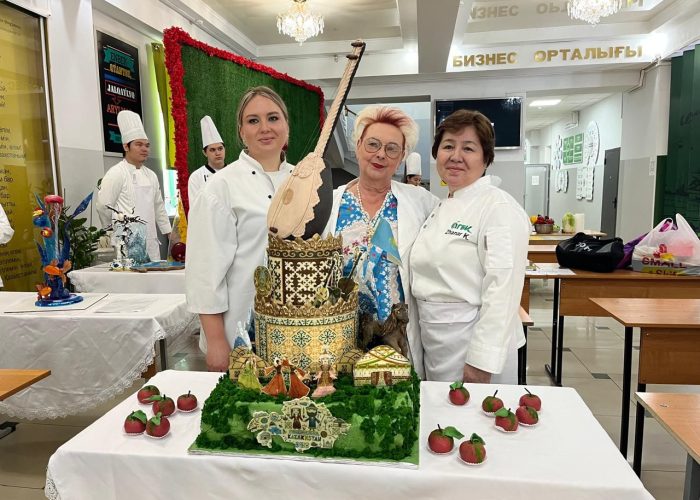
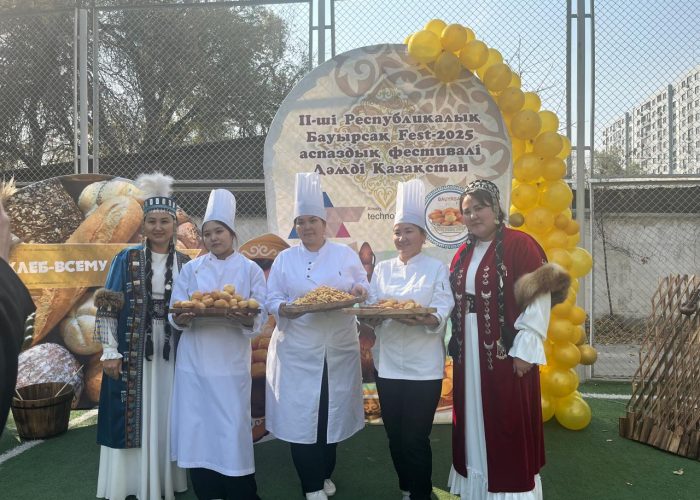
This video presents the specialty “Food Service Organization”. It introduces the training features aimed at organizing and controlling technological production processes. The video showcases classrooms and laboratories equipped with modern equipment, as well as students’ practical sessions where they develop professional skills. Special attention is given to the formation of competencies in planning, analyzing, and improving technological processes, maintaining quality standards, and efficiently using resources. This specialty provides wide employment opportunities in various sectors of industry and production

The video presents master of industrial training Chokanova B., who conducts a lesson on the topic “Introduction to technological modes of production of flour confectionery products.” During the lesson, the main stages of product preparation are demonstrated, including compliance with technological regimes, temperature and time parameters, as well as quality requirements for finished products. Students develop practical skills in working with equipment, learn to follow sanitary and hygienic standards, and comply with production requirements. This lesson contributes to the formation of professional competencies and the training of qualified specialists in the food production industry

The video presents the process of preparing puff pastry under the guidance of industrial training master Moiseeva O.K. During the lesson, the main stages of the technology are demonstrated, including the preparation of ingredients, kneading the dough, forming layers, as well as maintaining the required temperature regime and following proper dough handling techniques

The video features industrial training master Berdibekov B.A., who conducts a lesson on the topic “Primary processing of vegetables and methods of cutting them.” During the lesson, the main stages of vegetable preparation are demonstrated, including sorting, washing, peeling, and proper processing before use. Special attention is given to the types and techniques of vegetable cutting, their classification, and their application in various dishes

The video demonstrates the process of preparing the national dish “Nauryz kozhe.” The preparation technology is shown using traditional ingredients symbolizing prosperity and well-being. During the cooking process, the main stages are presented, including boiling meat broth, preparing and adding grains and flour products, as well as incorporating dairy components. Special attention is given to following the correct technological sequence and properly combining the ingredients

The video features Ibragimova M.Zh., who conducts a lesson on the topic “Food Preparation Technology.” During the lesson, the main stages of food preparation are discussed, including rules for raw material processing, compliance with technological processes, and sanitary and hygienic standards. Special attention is given to product quality, the efficient use of ingredients, and the proper organization of the working process

The video presents a lesson on the topic “Artistic fruit carving (carving).” During the lesson, the main techniques of artistic fruit processing are demonstrated, along with methods for creating decorative elements and compositions. Special attention is paid to precision, neatness, and adherence to safety rules when working with tools

The video presents the process of preparing syrniki under the guidance of the head chef of the Khama Park restaurant. During the lesson, the main stages of preparing the dish are demonstrated, including ingredient preparation, mixing the cottage cheese mixture, forming the products, and heat treatment. Special attention is paid to following the recipe, the cooking technology, and achieving the optimal texture and taste of the finished product

The video presents the process of grilling meat. During the lesson, the main stages of product preparation are demonstrated, including selecting and marinating the meat, preparing the grill, and controlling the temperature regime. Special attention is given to the correct level of doneness, preserving juiciness, and maintaining the taste qualities of the finished dish

The video features Ibragimova M.Zh., who conducts a lesson on the topic “Calculation of the quantity of products for preparing dishes made from eggs and cottage cheese.” During the lesson, the basics of technological calculation of raw materials are discussed, including determining the required amount of ingredients depending on the recipe and number of portions. Special attention is given to the correct proportion of products, economical use of raw materials, and compliance with technological standards

The video presents a master class conducted by Moiseeva O.K. on the topic “Preparation of dishes from seafood.” During the lesson, the main stages of processing and cooking seafood are demonstrated, including raw material preparation, storage conditions, heat treatment, and plating of finished dishes. Special attention is paid to preserving the taste and texture of the product, as well as complying with sanitary and hygienic requirements

The video presents a lesson conducted by Khussainova G.E. on the topic “Safety techniques when using thermal equipment.” During the lesson, the rules for operating thermal appliances, requirements for safe work with kitchen equipment, as well as possible risks and methods of preventing them are discussed. Special attention is given to compliance with sanitary standards, careful handling of hot surfaces, and the proper organization of the workplace

The video presents industrial training master Moiseeva O.K. on the topic “Organization of the cooking process and preparation of semi-finished products for culinary production.” During the lesson, the main stages of organizing the production process, rules for raw material preparation, and the technology of preparing semi-finished products are discussed. Special attention is given to following technological cards, sanitary and hygienic requirements, and the rational use of products

The video presents a lesson conducted by Kapasova Zh.A. on the topic “Regulatory and technical documentation.” During the lesson, the main types of regulatory and technical documentation used in professional practice, as well as their structure and significance, are discussed. Special attention is given to technological cards, standards, sanitary norms, and regulations governing the production process